
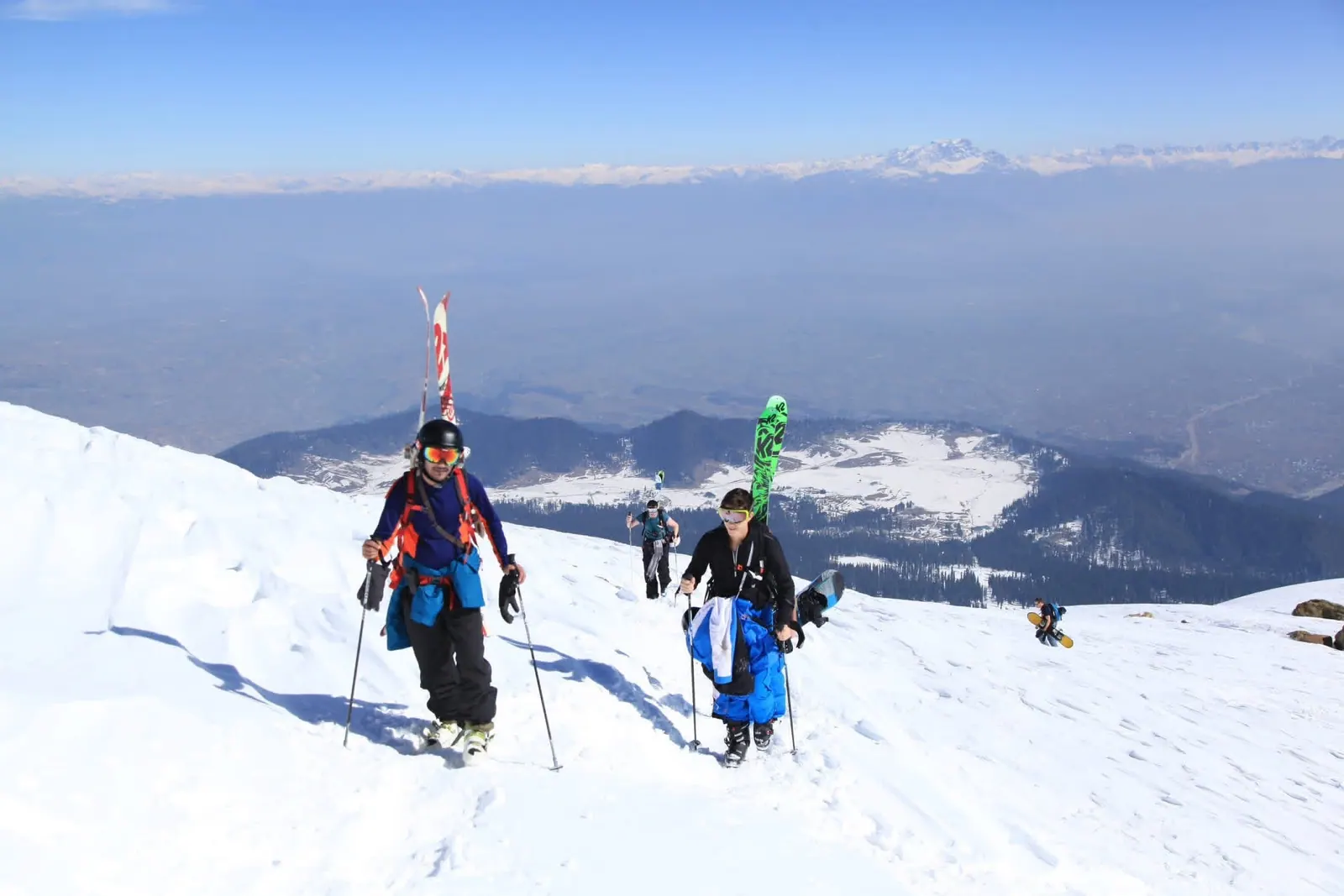
Terrain beyond the gondola, where a guide and a forecast matter
Five things we ask of every guest
- Check the avalanche report. The Gulmarg Avalanche Center posts an update every day. Other people’s tracks don’t mean a slope is safe.
- Carry rescue kit and know how to use it. Transceiver, shovel and probe for everyone in the group.
- Be ready to change plans. New snow, wind or warm weather can change a slope overnight.
- Stay together in the trees. Tree wells and hidden rocks are real hazards. Ski in pairs and keep each other in sight.
- Hire a guide if you’re unsure. A good guide will change the plan when conditions call for it. The best day in Gulmarg isn’t the steepest one. It’s the one you ski home from.
Snowpack
Winter storms roll in from the west. Every storm adds about 3ft of snow in a single snowpack. Wind can move that snow onto lee slopes overnight, and a warm spell can weaken what was solid yesterday. Tracks already on a slope only tell you that someone else passed — not that it will hold you.
The Gulmarg Avalanche Center publishes the day’s picture. Read it before you leave the hotel, then listen if your guide changes the plan.
Plan my tripThe avalanche danger scale
The center uses the five-level scale. The rating is for the day and the elevation band, not a promise about one slope.
| Rating | What it asks of you |
|---|---|
| 1. Low | Generally favourable. Isolated hazards can still exist. |
| 2. Moderate | Heightened conditions on specific terrain. Careful route choice. |
| 3. Considerable | Dangerous conditions. Conservative terrain, or a different plan. |
| 4. High | Very dangerous. Avoid avalanche terrain. |
| 5. Extreme | Avoid avalanche terrain entirely. |
How to choose a guide
Our guides are certified and trained to the New Zealand standard AIARE. A good guide checks conditions every morning, carries the same rescue kit they expect you to carry, and will change the plan when the snow calls for it.
If you don’t own a transceiver, shovel and probe, we rent them — and you still need to know how to use them. Never ski backcountry terrain alone.
Plan my tripOr WhatsApp us.